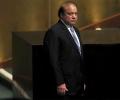
The South Asian Association for Regional Cooperation has "survived" but not "triumphed" as had been envisaged, Pakistan Prime Minister Nawaz Sharif on Thursday said while lamenting the postponement of the eight-member grouping's Islamabad summit.

China on Friday said it will not attend the planned G20 tourism working group meeting in Jammu and Kashmir next week, asserting that it is "firmly opposed" to holding such meetings in the "disputed territory".

Other world leaders too voiced concern against terrorism and vowed to fight it collectively.
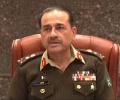
The ISI was taking no chances and wanted no repeat of Pulwama; it wanted to make it clear at a political level it was not involved with the revenge attack being planned, but was only giving India a friendly tip-off. A stunning excerpt from Ambassador Ajay Bisaria's Anger Management: The Troubled Diplomatic Relationship between India and Pakistan.

It would be the highest level visit to India by any Pakistani leader in recent years and a possible opportunity to break the ice between the two nations.
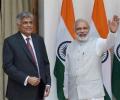
The meeting comes as India continues its attempts to isolate Pakistan in the South Asian region after the attack on its army camp in Uri.

Blaming Pakistan for sponsoring terrorism in India, Home Minister Rajnath Singh on Saturday said the neighbouring country is providing shelter to Dawood Ibrahim and the mob boss is currently staying along the Pak-Afghan border.

Pakistan needs to take practical steps to demonstrate that it is countering terrorist financing and extremists.
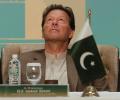
Opposition political parties this month sought a no-confidence motion in parliament to remove Pakistan Prime Minister Imran Khan.
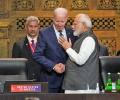
Pakistan has formally lodged a protest with the US over its joint statement with India against the country's involvement in cross-border terrorism.
'There is nothing that Pakistan has done which deserves a resumption of dialogue. The assurances made in Ufa contain no commitment except a whole range of talks, which could take place without the paraphernalia associated with a joint statement of prime ministers.'
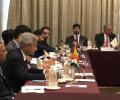
Jaishankar was among the first ministers to arrive for the SAARC ministerial meeting. He was in the meeting for over 45 minutes and then left.

India said on Thursday that it desired normal relations with all its neighbours, including Pakistan, and advised Islamabad to create a conducive atmosphere, including by taking "credible, verifiable and irreversible actions" to stop cross border terrorism against it and enable the two countries to engage and address issues bilaterally.
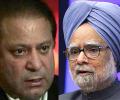
However much one underplays the meeting between India and Pakistan's top leaders, it can never be undervalued, reports Sheela Bhatt.

Pakistan will not engage with India 'until and unless they lift the siege' in Kashmir, it said.

Kartarpur Sahib in Pakistan is located across the river Ravi, about four kilometres from the Dera Baba Nanak shrine in Punjab's Gurdaspur district.

The external affairs minister reiterated India's position on Afghanistan and highlighted its humanitarian support to the war-torn country, including the supply of wheat, medicines, vaccines and clothing.
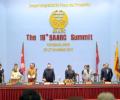
Apart from India, Bangladesh and Bhutan have also pulled out of the SAARC Summit in Islamabad in November, saying the environment is not right for the successful holding of the meet.

If the Pakistani foreign minister attends the meeting in person, it will be the first such visit from Islamabad to India since 2011.

'As one might expect, he believed the Indians were preparing their nuclear weapons for deployment. It took us a few hours - and remarkably good work by our teams on the ground in New Delhi and Islamabad - to convince each side that the other was not preparing for nuclear war'

"We will soon find out. I'm in no rush. There's no testing... If you look at the end of the Obama administration, it was a disaster. What was going on. You don't have that right now. It's a much different feeling. I think people have...there's always danger, but I think people have much different feeling," he said.

External Affairs Minister S Jaishankar is set to hold separate bilateral talks with his Chinese counterpart Qin Gang and Russia's Sergey Lavrov at a beach resort in Goa on Thursday on the sidelines of a conclave of the Shanghai Cooperation Organisation (SCO) amid rapidly evolving regional security situation.

'How can any religion have anything to do with terrorism? How was Islam equated with terrorism? And once that happens, how does a man in the western country differentiate between a moderate Muslim and a radical Muslim'

Being with Russia means being on the wrong side of history and Kyiv wants closer and deeper relations with New Delhi, Ukraine's First Deputy Foreign Minister Emine Dzhaparova said on Tuesday while suggesting that the Russian invasion has lessons for countries with 'difficult neighbours'.

'While the US-Pakistan relationship has been stabilised, it's still mired in uncertainty.'
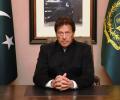
This is the second time after Modi was re-elected to power that the Pakistani premier has expressed his desire to work together with India for the betterment of their peoples.

India shifted gears in rejuvenating strategic ties with its major partners like the US and Russia and focused on drumming up global support for its distinct strategy in the Indo-Pacific to check Beijing's increasing muscle-flexing in the region.

Wang began a two-day trip to Pakistan on Tuesday primarily to attend a meeting of the Council of Foreign Ministers of the Organisation Islamic Cooperation (OIC) as a special guest.
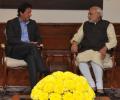
PM Modi telephoned Imran Khan to congratulate him on his party's victory in the general elections

Pak's role in Kabul is not sending a good message to India, a top American lawmaker has said

Dulat, who was advisor on Jammu and Kashmir to the central government during the tenure of former prime minister Atal Behari Vajpayee, also advocated the need for starting a dialogue with Pakistan.

Mr Modi might have questions to ask himself on the most formidable strategic challenge before India that he inherited from the United Progressive Alliance: The triangulation between China and Pakistan. The failure to break out of it, or even loosen it a bit, is something to reflect on, notes Shekhar Gupta.

Chinese Foreign Minister Wang Yi arrived in India Thursday evening in the highest-level visit between the two countries after the ties came under severe strain following the eastern Ladakh standoff nearly two years ago.

Pakistan's prime minister is trying to use the unrest in Kashmir to save his government, says Ambassador G Parthasarathy, a former high commissioner to Islamabad.
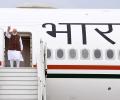
Notably, Pakistan had previously denied the permission of President Ram Nath Kovind and Prime Minister Modi to use Pakistan's airspace thrice to travel to foreign countries in 2019 after India abrogated Article 370 from Jammu and Kashmir.

With Modi's international image seriously damaged -- perhaps, irrecoverably -- and Indian foreign policy finding itself in drift, we move on to the New Year in a depressing scenario, points out Ambassador M K Bhadrakumar.

'All this talk of 'tactical nuclear weapons' or a limited nuclear war are 'false flags'! It looks like India and Pakistan are slowly but surely inching towards this realism,' says Colonel Anil A Athale (retd).
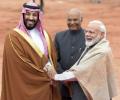
'The more emphatic denial of any proposal for an OIC foreign ministers meet in Islamabad appears aimed at keeping Pakistan on a leash,' notes Lieutenant General Syed Ata Hasnain (retd).

Prime Minister Modi told President Xi that he has made efforts to improve ties with Islamabad but these efforts have been "derailed".
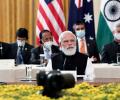
"In all the meetings the Prime Minister had, beginning with US leadership, there was a suo moto recognition of the concerns that Pakistan represents as a country that has in many senses both supported and nurtured cross-border terrorism, including in Afghanistan and from Afghanistan," he said.
